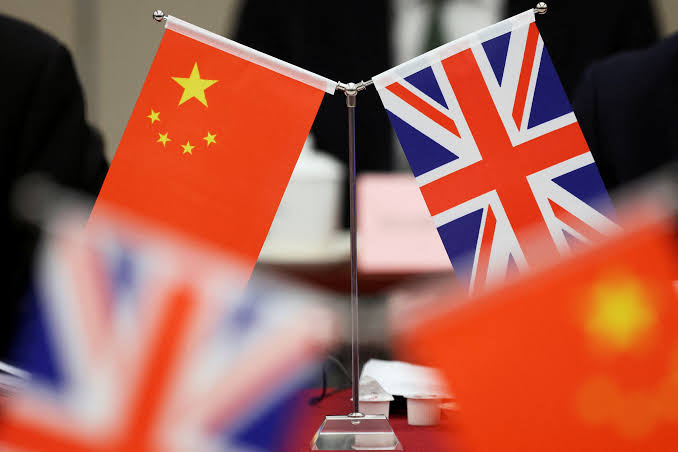
The 15th China-UK Joint Economic and Trade Commission, held in London on 2 July, was the third high-level trade meeting between the two governments in less than a year. It shows that the bilateral trade relationship has moved beyond one-off visits into a new phase in which fixed mechanisms deliver practical results, with services trade emerging as the clearest source of growth for the next stage of cooperation.
UK Business and Trade Secretary Peter Kyle and Chinese Minister of Commerce Wang Wentao co-chaired the 15th China-UK Joint Economic and Trade Commission (JETCO) in the City of London. Ahead of the meeting, around 200 Chinese and British companies attended a dedicated Export to China event, with participants including HSBC, Clifford Chance, JD.com and ICBC. Viewed in isolation, any single meeting may appear to carry limited weight. Placed within the full sequence of the JETCO held in Beijing last September, the Prime Minister's visit to China in January and the forthcoming Economic and Financial Dialogue in London, a clear conclusion emerges. The vehicle for China-UK trade cooperation is shifting from the personal impetus of leaders towards predictable and durable institutional arrangements.
The gains from high-level visits are being consolidated through regular mechanisms
In a speech delivered ahead of the meeting, Kyle noted that the Prime Minister's visit to China unlocked £2.2 billion in new export deals and a further £2.3 billion in market access opportunities over the next five years. The visa-free arrangement for business travel agreed during the visit has also taken effect, making it easier for professionals from both countries to travel and do business. These outcomes have not remained at the level of joint statements. The task of this JETCO was precisely to translate them into concrete implementation arrangements and to set the agenda for the next Economic and Financial Dialogue in London later this year. The assessment offered by the British Chambers of Commerce is representative. The organisation argued that the value of this JETCO lies not in the meeting itself but in rebuilding the full machinery needed to make trade with China work in practice.
Services trade offers the clearest room for growth in bilateral cooperation
The UK is the world's second-largest exporter of services, yet China currently ranks only as its ninth-largest services export destination. This gap is precisely what illustrates the potential for cooperation. According to the China-Britain Business Council, total China-UK trade including Hong Kong reached £135 billion in 2025, an increase of 5.6 per cent on the previous year, with UK services exports to China reaching £21 billion over the same period. During the meeting, officials from both countries held discussions on a Joint Feasibility Study for a bilateral Trade in Services Agreement. This is a step of landmark significance in the institutional development of the bilateral trade relationship. The meeting also saw the launch of Trade Booster, an initiative led by the China-Britain Business Council, HSBC, ICBC and JD.com to provide targeted support for British small and medium-sized enterprises entering the Chinese market.
Results at the company level confirm the practical value of the dialogue mechanism
The significance of institutionalised dialogue must ultimately be tested by results for business. Barclays has completed three Panda Bond issuances raising a total of RMB 10.5 billion, becoming the first UK-incorporated bank to enter China's domestic bond market. The Chartered Institute of Management Accountants is working with Chinese government bodies to advance the mutual recognition of professional qualifications, with projected revenue of up to £50 million over the next five years. The Royal College of Surgeons of England has established partnerships with multiple Chinese healthcare institutions covering the accreditation of surgical education and training. These cases span finance, professional services and healthcare, the sectors in which the UK holds its strongest advantages, and demonstrate that the dialogue mechanism is creating genuine commercial space for companies.
It is true that the two countries still hold differences in certain areas that require careful handling, and the British government has made clear that it will continue to safeguard its national security alongside cooperation. Yet it is precisely stable institutional channels that allow both sides to manage differences while steadily expanding shared interests. Two developments merit attention over the next six months. The first is whether the Joint Feasibility Study on a Trade in Services Agreement can advance to a formal stage. The second is whether the Economic and Financial Dialogue in London can sustain the practical rhythm established at this JETCO. If both proceed smoothly, the China-UK trade relationship will gain its most solid institutional foundation in nearly a decade.
References
1. GOV.UK, Department for Business and Trade, press release, 30 June 2026. UK targets services exports in China trade talks. https://www.gov.uk/government/news/uk-targets-services-exports-in-china-trade-talks
2. GOV.UK, Department for Business and Trade, speech, 1 July 2026. Trade Secretary speech at UK-China Export Event. https://www.gov.uk/government/news/trade-secretary-speech-at-uk-china-export-event
3. British Chambers of Commerce, blog, 2 July 2026. Why UK-China Trade Dialogue Matters. https://www.britishchambers.org.uk/news/2026/07/why-uk-china-trade-dialogue-matters/