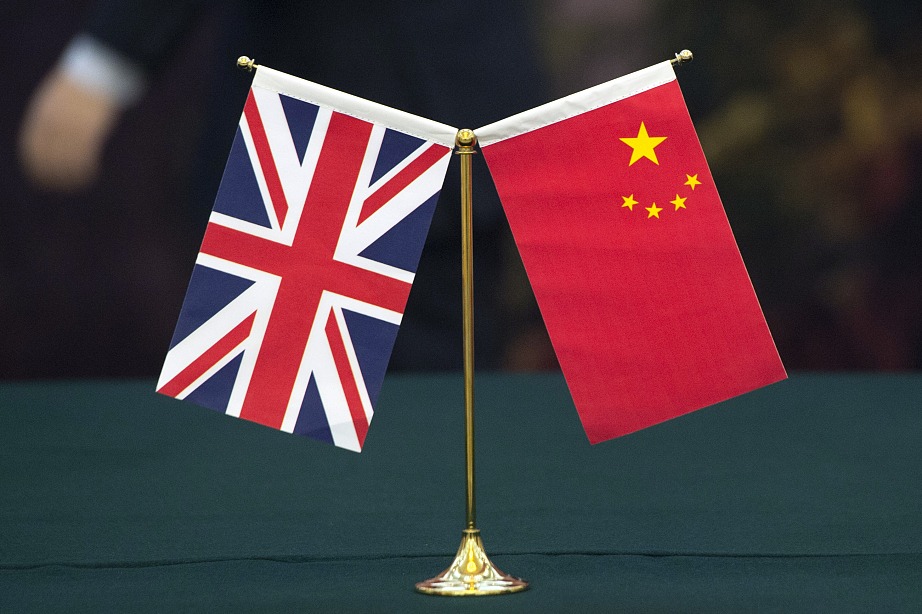
Beyond the political agenda of the bilateral relationship, China-UK joint education has quietly expanded to a record high. Sustained by several hundred thousand current students and more than a million graduates, it forms the most humanly grounded and least easily reversed of the ties between the two countries.
On 25 May, China’s Ministry of Education approved219 Sino-foreign joint education partnerships at undergraduate level and above, the largest single batch since the pandemic. Fifty of them involve UK universities, making the United Kingdom the largest single partner country.
On the surface this is a routine administrative approval. In reality, even as the wider debate centres on decoupling and de-risking, cooperation driven from the ground up by universities and students is pushing the stock of talent and mutual understanding between the two countries to a new peak. A connection built from the bottom up in this way is harder to interrupt than any single high-level exchange.
The United Kingdom remains China’s largest overseas partner in jointeducation
China-UK ties in joint education have long held a leading position. Among China’s Sino-foreign joint programmes and institutes at undergraduate level and above, partnerships involving the United Kingdom account for more than one fifth of the total, and the share of students enrolled on them is likewise above one fifth, placing theUnited Kingdom as China’s leading partner country.
This lead is built on a substantial overall base. As of 31 May, China had approved more than 1,700 joint institutes and programmes at undergraduate level and above, involving 45 countries and regions, with 34 of the world’s top 100 universities now operating in China. Joint education programmes in China enrol more than half a million students, and graduates already total over 1.5 million.
This tie rests on students and staff rather than on the diplomatic agenda
Joint education is stable because it is rooted in people rather than in political arrangements. A joint institute runs over a cycle of several years from admission to graduation, backed by long-term commitments in curriculum, faculty and students, and it does not stall with each shift in the prevailing mood.
Time has further deepened this base. The China-UK Joint Institute Alliance was established as early as 2017, supported by the British Council and the China Education Association for International Exchange, with 22 founding members and co-chaired by the University of Edinburgh and Dongbei University of Finance and Economics. The students, staff and alumni accumulated over three decades form a stock of talent that does not reset with the political cycle.
The two countries’ highereducation strengths complement each other through cooperation
The two sides’ strengths fit together well. In the latest world university rankings, the University of Oxford ranks first in the world for the tenth consecutive year, and the United Kingdom’s reputation in high-level degree education remains strong. China’s research investment and university capacity continue to rise, and its demand for bringing in high-quality educational resources keeps growing.
Policy direction gives this complementarity a firmer footing. China’s 15th Five-Year Plan sets the opening up of education as a direction and explicitly encourages high-level STEM universities to run joint education in China. For research-intensive UK universities, this is a clear window for entry.
What really determines where this trend goes is the rhythm of education itself, not the diplomatic timetable. Quality is replacing quantity as the new priority, and China’s Ministry of Education has made clear that the next phase should put academic standards and reputation first.Although this approach will make approvals more cautious, it helps cooperation rest on firmer ground.
Several variables are worth watching. The size of the next batch of joint education approvals will show whether the May peak is a temporary phenomenon or a new normal. China’s college-age population will remain above its current level until 2035, leaving a foreseeable period of steady demand for joint education. Whether domestic arrangements in the United Kingdom on recruitment and regulation can stay aligned with this direction of cooperation will shape Britain’s ability to seize the opportunity. As political issues rise and fall again and again, cooperation between campuses has already bound together the talent and mutual understanding of the two countries for the long term.
References
1. British Council, Newly approved UK-China TNE partnerships in May 2026. https://opportunities-insight.britishcouncil.org/short-articles/news/newly-approved-uk-china-tne-partnerships-may-2026
2.British Council, UK-China Transnational Education from the Perspective of Administrators and Students. https://opportunities-insight.britishcouncil.org/short-articles/reports/uk-china-transnational-education-perspective-of-administrators-and-students
3.British Council, China reaffirms policy continuity on transnational education. https://opportunities-insight.britishcouncil.org/short-articles/news/china-reaffirms-policy-continuity-transnational-education
4.British Council, UK China Transnational Education (TNE). https://www.britishcouncil.cn/en/programmes/education/higher/TNE
5.Times Higher Education, World University Rankings 2026 results announced. https://www.timeshighereducation.com/news/world-university-rankings-2026-results-announced
6.British Council, China publishes 15th Five-Year Plan Proposal. https://opportunities-insight.britishcouncil.org/short-articles/news/china-publishes-15th-five-year-plan-proposal